
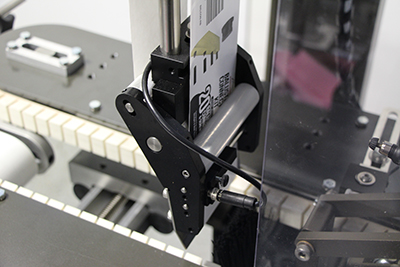
How Automation Reduces Labor Costs in Labeling
In today’s competitive manufacturing and packaging landscape, businesses are under constant pressure to do more with less. Rising wages, labor shortages, and increasing production demands have made efficiency a top priority. One of the most impactful ways companies are addressing these challenges is through labeling automation.
At Accent Label Automation, businesses are leveraging advanced labeling systems to streamline operations, improve accuracy, and significantly reduce labor costs. But how exactly does automation achieve this? Let’s break it down.
The True Cost of Manual Labeling
At first glance, manual labeling may seem cost-effective. However, the hidden costs add up quickly:
- High labor hours for repetitive tasks
- Increased risk of human error
- Production slowdowns and bottlenecks
- Rework and material waste
Labeling is often one of the most labor-intensive processes on the production floor, requiring workers to manually apply, align, and verify labels—tasks that are both time-consuming and prone to fatigue-related mistakes.
As production scales, these inefficiencies multiply, driving up operational costs.
1. Reducing Dependence on Manual Labor
The most direct way automation lowers costs is by reducing the need for hands-on labor.
Automated labeling systems can handle tasks that would otherwise require multiple employees. In many cases, one operator can oversee a machine that performs the work of several people.
This doesn’t necessarily mean eliminating jobs—it means reallocating workers to higher-value tasks such as quality control, logistics, or customer service.
Result: Lower labor costs per unit and improved workforce efficiency.
2. Increasing Speed and Throughput
Manual labeling simply cannot keep up with modern production speeds. Automated systems can apply labels at a consistent, high rate—often labeling hundreds or thousands of products per hour.
By eliminating bottlenecks in the labeling stage, businesses can:
- Increase overall production output
- Reduce overtime and additional staffing needs
- Meet growing demand without expanding their workforce
Result: More products produced in less time, with fewer labor hours required.
3. Eliminating Costly Errors and Rework
Human error is one of the biggest hidden labor costs in manual labeling. Misaligned, incorrect, or damaged labels lead to:
- Re-labeling and rework
- Product recalls or compliance issues
- Wasted materials and time
Automated systems apply labels with precision and consistency every time, drastically reducing errors and the need for corrections.
Result: Less time spent fixing mistakes and more time spent producing.
4. Reducing Waste and Material Costs
When labels are applied incorrectly, they often need to be discarded and replaced. Over time, this waste becomes a significant expense.
Automation minimizes misapplication and damage, ensuring labels are applied correctly the first time.
Result: Lower material waste and reduced indirect labor costs associated with rework.
5. Enabling Scalable Growth Without Hiring
As businesses grow, manual labeling quickly becomes a bottleneck. The traditional solution—hiring more workers—only increases overhead.
Automation allows companies to scale production without scaling labor at the same rate. Systems can run continuously and adapt to higher volumes without compromising performance.
Result: Sustainable growth with controlled labor expenses.
6. Improving Employee Productivity and Satisfaction
Repetitive labeling tasks can lead to fatigue, decreased productivity, and higher turnover rates. Automation removes these monotonous duties, allowing employees to focus on more engaging and valuable work.
This shift can lead to:
- Improved morale
- Reduced training and hiring costs
- Better overall efficiency
Result: A more productive workforce with lower long-term labor costs.
7. Maximizing ROI Over Time
While automated labeling systems require an upfront investment, the long-term savings are substantial. Businesses benefit from:
- Reduced payroll expenses
- Higher production efficiency
- Lower error-related costs
- Increased output and revenue potential
Over time, these savings often outweigh the initial cost of automation, delivering a strong return on investment.
Conclusion
Automation in labeling isn’t just about speed—it’s about smarter resource allocation. By reducing reliance on manual labor, minimizing errors, and enabling scalable production, automated labeling systems provide a clear path to lower operational costs and higher profitability.
For businesses looking to stay competitive, investing in labeling automation is no longer optional—it’s a strategic advantage.
To learn more about how automation can transform your labeling process contact us today.